How to Help Your Child Focus on Homework (Ages 10 to 14)
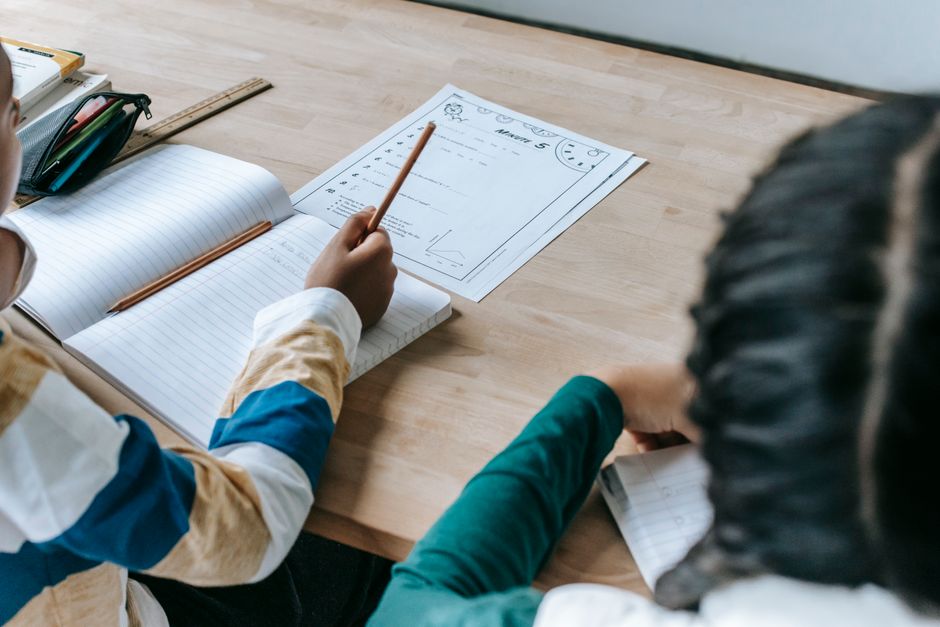
You fed them. They had a break. The book is open, the pencil is in hand, and twenty minutes later almost nothing has happened. If that scene plays out in your house most weeknights, you are not doing anything wrong, and your child is not being lazy. Focus at homework time is a skill, and like most skills it depends on a surprising number of things going right at once.
This guide is for parents of tweens, roughly ages 10 to 14, who are tired of the nightly negotiation. It covers what is happening in your child's brain during homework, how to set up the environment, how to use breaks and timers without turning your kitchen into a classroom, and how to tell the difference between an ordinary rough patch and something that deserves a closer look.
Why Focus Falls Apart in the First Hour After School
It is hard to fault a child who resists homework. By the time they walk through the door, they have already put in a long day at school, and many tweens have had an after-school activity on top of that. The late afternoon slides into evening, and the last thing their brain wants is one more demand.
There is also a skills piece that often gets missed. Being bright or creative does not automatically translate into consistent academic performance. Some kids can grasp big ideas, remember fascinating facts, and think in inventive ways, but still struggle with executive function skills such as focus, follow-through, and organization. That gap shows up loudest at homework time, when nobody is there to keep the day moving for them.
Handle the Body First, Then the Books
Before you talk about assignments, make sure your child is fed and relaxed. That single step resolves a startling number of "I can't focus" complaints, because a hungry or wired-up tween is not a focused tween.
Once they have eaten and had a chance to decompress, talk through the assignments together. You do not need to plan the whole evening for them. You just need to remove the fog of not knowing what the night looks like.
- Offer a snack and a genuine pause before anything academic.
- Ask what needs to get done, and let them tell you rather than reading it off a portal.
- Build in movement. Many parent-facing tip lists include physical activity before homework, sometimes described as wearing them out, because a body that has moved tends to settle more easily.
What Is Really Happening With Executive Function
The skills homework actually demands
Homework asks for more than knowledge. A tween has to hold the task in mind, ignore the phone and the dog and the sibling, start without a running start, and keep going when the work gets boring. Those are executive function skills, and they develop unevenly through the tween years. A child who can focus for an hour on a video game is not proving they can focus on a worksheet. Games are built to hold attention. Algebra practice is not.
Why "smart but can't focus" is so common
Parents often describe a child who is sharp, funny, and full of ideas, yet cannot seem to finish anything. That mismatch is not a contradiction. Focus, follow-through, and organization are separate skills from intelligence, and they can lag behind. The good news is that they respond well to practice, structure, and a bit of patience from the adults in the room.

Build a Homework Space That Works With Your Child
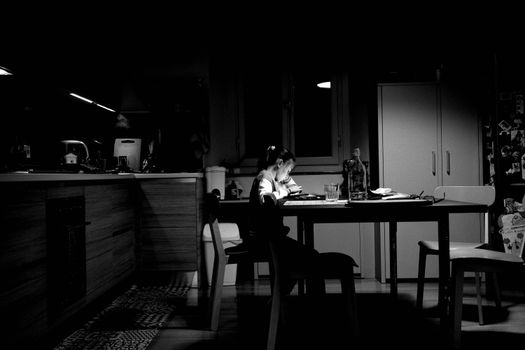
A designated space for homework helps more than most families expect. It does not have to be a desk in a quiet study. It has to be a spot that your child associates with one job, not five. The kitchen table counts if the table is cleared and the television is off.
Two rules do most of the heavy lifting. One is doing one thing at a time, which means no scrolling, no texting, and no "quick" question to a sibling mid-sentence. The other is keeping the space boring in the right ways and comfortable in the others: decent light, water within reach, and materials that actually work.
Fidgets are sensory tools that can help some kids focus better. Rubber bands and squeeze balls let a child get movement and sensory input without leaving the chair. If your child is a leg-bouncer or a pencil-tapper, a small sensory tool may redirect that energy instead of fighting it.
Use a Timer and Keep Sessions Short
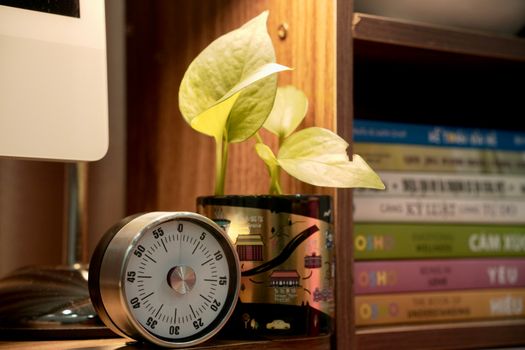
One of the most practical habits you can build is putting aside a reasonable amount of time for your child to practise focusing on a specific task, using a timer. The timer is not a punishment. It is a finish line they can see. A short, defined block of work feels possible in a way that "do your homework" never does.
The same source of tips that recommends timers also recommends keeping sessions short, which is a hint about how tween attention actually behaves. Short bursts with real endings beat one long slog. When the timer goes off, stop, even if the work is not finished. Then reset and go again if needed.
Keep it positive. Praise the starting and the effort, not just the finished page. A child who hears "you sat down and got going right away" learns that starting is the achievement worth repeating.
Hand Over What You Can: Order, Format, and Choices
Reluctant children often become more willing when they get a real say in how the night runs. A simple "Done/To Do" list gives your child something concrete to move items across. Ask your child to put the assignments in the order they would like to do them, and encourage them to explain their reasoning. You may not agree with the order, and that is fine. The ownership matters more than the sequence.
There is also room to be creative with homework tasks. Spelling words can be practised out loud in the car. A history reading can be summarized to you over a snack. If a task can be done in a way that suits your child's energy, let it.
And sometimes the most useful move is to give up on the night. If your child has been at it for a long stretch with nothing to show, pushing harder usually costs more than it gains. Stop, note what got done, and email the teacher if the work is genuinely beyond reach tonight.
Put It All on a Daily Schedule
Help your child create a daily schedule that includes time for homework, study breaks, and their other activities. Sticking to this schedule reduces the nightly question of when and whether work happens, because the answer is already on the fridge. A predictable routine also gives a tween a fair shot at building the follow-through habit on their own.
What you see at homework time
Melting down before the books even open
A practical first step
Snack and decompression first, then talk through the assignments together
What you see at homework time
Starting strong, drifting by the middle
A practical first step
Shorter work blocks with a timer, plus a real break between them
What you see at homework time
Arguing about what to do first
A practical first step
A Done/To Do list where your child chooses the order and explains it
What you see at homework time
Wriggling, tapping, and leaving the chair
A practical first step
A designated space, one task at a time, and a small sensory tool within reach
What you see at homework time
"I'll do it later" every single night
A practical first step
A written daily schedule with homework, breaks, and activities built in
When the Resistance Needs More Than a Timer
Some kids do not have a focus problem so much as a starting problem. The work is not too hard. The chair is just very far away. If that sounds like your house, the free 10-Minute Homework Starter Checklist is built for exactly this moment. It uses a method called Start-in-10 and gives you a printable, screen-free way to get the first ten minutes moving without a fight.
If you want the actual words to say when the negotiation starts, the Full Homework Scripts pack is $11.99 and gives you parent-tested phrasing for the usual flashpoints: the stall, the whine, the sudden need for water, and the meltdown that arrives out of nowhere. Between the free checklist and the scripts, most families find they can get through a weeknight without raising their voice.
When Focus Struggles Might Need Professional Support
Every child has rough weeks. What matters is the pattern. If focus problems show up at homework, at school, and in activities your child genuinely enjoys, that is worth mentioning to someone with more training than a blog post.
A good first step is usually your child's teacher, who can tell you whether the same struggle shows up in class, followed by your family doctor if the pattern is consistent and long-running. Bring specifics: how long the struggles have lasted, what you have already tried, and what happens at homework time in your house. If you are considering diet changes such as adding more fish, that is a question for your doctor rather than a tip to act on alone. None of this is about labelling your child. It is about making sure you are not trying to solve something on your own that deserves help.
Frequently Asked Questions
How long should a tween be able to focus on homework?
Shorter than most parents expect, and shorter than the assignment list usually assumes. Attention is best treated as a series of short blocks with real breaks in between rather than one long sitting. Use a timer, stop when it goes off even if the work is unfinished, and reset. You are training the muscle, not testing it.
Should I sit with my child during homework?
Sit nearby at first if it helps them start, then step back as the routine takes hold. Your job is to remove friction, not to do the thinking. Being in the room can be reassuring for a tween who stalls easily. Being over their shoulder for the whole page teaches them to wait for you instead.
Why does my child say "I'll do it later" every night?
Usually it is a starting problem dressed up as a timing problem. The task feels vague and heavy, so the brain postpones it. A written daily schedule, a Done/To Do list, and a visible timer all shrink the gap between deciding and doing. Let your child choose the order once the plan is set.
Do snacks, movement, and breaks actually make a difference?
Yes, and they are the cheapest fixes available. A child who is fed and relaxed before homework is far easier to work with than a hungry, wound-up one. Movement before the books come out helps many kids settle. Breaks are not lost time. They are what makes the next block possible at all.
When should I look for outside help with focus?
Look for help when the struggle shows up in more than one setting, not only at the kitchen table. Talk to your child's teacher first to see whether class looks the same as home, then to your family doctor if the pattern is consistent. Note what you have tried and how long the difficulty has lasted.
None of this turns homework into a calm, tidy ritual overnight. But the pieces fit together in a way that rewards consistency: feed them, move them, give them a space and a timer, hand over the choices you can, and stop before the night turns into a fight. Do that for a couple of weeks and you will have something more useful than a perfect evening. You will have a routine your child can eventually run without you standing over the table.